Saturday, January 8, 2022

What Is Barnard College Columbia University

Barnard is a small, highly selective liberal arts college for women located in New York City. The student body of just over 2,650 is part of a diverse and close-knit community and students study with leading scholars who serve as dedicated, accessible mentors and teachers. Founded in 1889, Barnard also engages in a unique partnership with Columbia University, situated directly across the street. Students have access to cross-registration of courses with Columbia, many joint extracurricular activities, participate in NCAA Division I Ivy League athletics and enjoy a fully coed social life.

what is barnard college columbia university - Barnard is a small

The location in New York City grants students access to thousands of internship opportunities in addition to unparalleled cultural, intellectual and social resources. Barnard's diverse student body includes residents from nearly every state and more than 55 countries worldwide. About 40 percent of the student body identify as students of color, and 11 percent are non-US citizens or permanent residents. Barnard is a small, highly selective liberal arts college for women, in partnered with Columbia University and located in New York City. Its faculty, more than half of whom are women, are prominent scholars as well as dedicated and accessible teachers.

what is barnard college columbia university - The student body of just over 2

Adding immeasurably to a Barnard education is its location in New York City, where students have access to thousands of internships and unparalleled cultural, intellectual and social resources. Barnard is a private women's liberal arts college located in New York City directly across the street from the Columbia University Campus. Barnard is affiliated with Columbia University, a unique partnership that allows students to take classes at both schools. It's the best of both worlds; Barnard students experience the advantages of attending a small college, yet have the resources and opportunities of one of the world's best research universities at their fingertips.

what is barnard college columbia university - Founded in 1889

Founded in 1889, Barnard is a small liberal arts and sciences college for women. Our unique and longstanding partnership with Columbia University provides students with a vast selection of additional course offerings, extracurricular activities, NCAA Division I Ivy League athletics, and a fully coeducational social life. A Barnard education is structured around The Nine Ways of Knowing, a flexible set of requirements designed to equip students to respond critically and creatively to a rapidly changing world and debate ideas from new perspectives. Our faculty is comprised of leading scholars who serve as dedicated, accessible teachers to our diverse community of 2400 extraordinary women. The College's metropolitan location grants students access to thousands of internships in addition to excellent cultural, intellectual, and social resources. Barnard students graduate from the University, though we remain an independent institution.

what is barnard college columbia university - Students have access to cross-registration of courses with Columbia

Enjoying the Barnard experience, for me, was a lot about enjoying the feeling of living in New York, particularly in a more subdued neighborhood like Morningside Heights (not as busy and over-stimulating as, say, the neighborhood around NYU). I liked the balance between having an entire city at my doorstep and having the quiet, intimate retreat of the Barnard campus to come back to. The campus is physically very small, but it doesn't feel this way, because you have access to space, activities, and resources across the street at Columbia. One potentially uncomfortable aspect of going to Barnard is the ambiguous relationship between Barnard and Columbia, which the administration does a pretty poor job of defining.
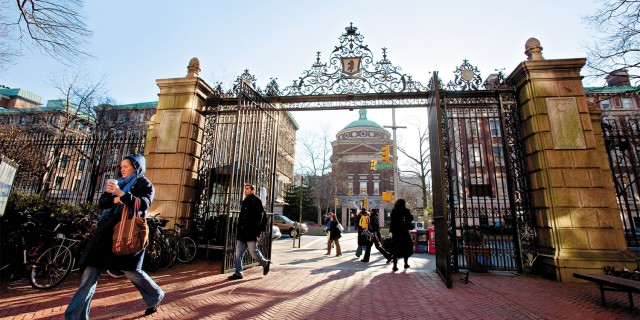
what is barnard college columbia university - The location in New York City grants students access to thousands of internship opportunities in addition to unparalleled cultural

When I tell people I went to Barnard, I often get the question, "Oh, so, is that like, the same thing as Columbia?" The answer I give them is no, it's not, it is its own college with its own philosophy of higher education. But, being affiliated with Columbia University, it offers students the opportunity to take Columbia courses, participate in Columbia student groups, use the Columbia libraries, and just hang out on the Columbia campus. The way I see it, every student can choose her own balance between Barnard and Columbia life and find some satisfying meeting point between the two worlds. Though Barnard partners with its across-the-street neighbour Columbia, the women's college is a separate institution both legally and financially, with its own admissions process, curriculum, board of trustees, and endowment. Students at Barnard may take courses and participate in athletics and organizations at Columbia , and graduates of Barnard receive a diploma from Columbia University that is signed by the presidents of both institutions.

what is barnard college columbia university - Barnard

Though Columbia began admitting women in 1983 and wanted to incorporate the women's college into its student body, Barnard maintained its commitment to single-sex education. Despite the affiliation Barnard is legally and financially separate from Columbia, with an independent faculty and board of trustees. It is responsible for its own separate admissions, health, security, guidance and placement services, and has its own alumnae association. Nonetheless, Barnard students participate in the academic, social, athletic and extracurricular life of the broader University community on a reciprocal basis, and several of the university's undergraduate departments are based in the college. Most Columbia classes are open to Barnard students and vice versa.

what is barnard college columbia university - About 40 percent of the student body identify as students of color

Barnard students and faculty are represented in the University Senate, and student clubs are open to all students. As of 2012 Barnard pays Columbia about $5 million a year under the terms of the "interoperate relationship", which the two schools renegotiate every 15 years. Nonetheless, Barnard students participate in the academic, social, athletic and extracurricular life of the broader University community on a reciprocal basis.

what is barnard college columbia university - Barnard is a small

The affiliation permits the two schools to share some academic resources; for example, only Barnard has an urban studies department, and only Columbia has a computer science department. Barnard students and faculty are represented in the University Senate, and student organizations such as the Columbia Daily Spectator are open to all students. Barnard students play on Columbia athletics teams, and Barnard uses Columbia email, telephone and network services. Through an agreement with List College of the Jewish Theological Seminary, located just north of the campus at 122nd Street, students can apply to simultaneously earn a BA degree from Barnard and a BA at JTS.

what is barnard college columbia university - Its faculty

Barnard also offers highly-talented music students the opportunity to apply for the Lesson Exchange Program with Juilliard and/or the Cross Registration Program with the Manhattan School of Music. Both programs will require a separate application and audition. The Lesson Exchange at MSM and Juilliard provide private weekly lessons with faculty. It is important to note that the Exchange does not include participation in large ensembles. Students in the Juilliard program can take classes in instrumental or vocal performance and piano composition.
what is barnard college columbia university - Adding immeasurably to a Barnard education is its location in New York City

MSM students can take lessons for instrumental or composition only. Barnard does also offer a multitude of music courses, major, private lessons and many performance opportunities through its own music department and at Columbia. "Small liberal college in the best city in the world with all the perks of a big university across the street," is exactly what admissions office will tell you and they're right. If you love the city, but still want a campus that feels like home... If you want to be surrounded by the most intelligent, driven women you'll ever meet in your life... If you want all the resources of a huge university, but the care and attention of a small school...
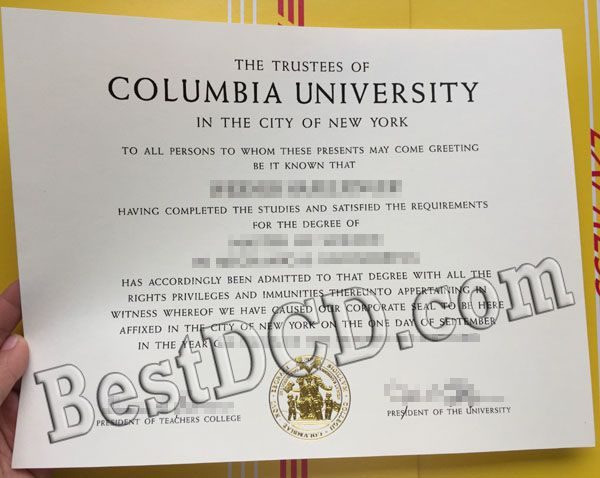
what is barnard college columbia university - Barnard is a private womens liberal arts college located in New York City directly across the street from the Columbia University Campus

If you want a solid liberal arts base, but the opportunity for great work experience during your time in college... If you want to feel like you're part of a greater legacy and network of alumnae... Founded in 1889 as a college for women closely affiliated with the then all-male Columbia University, Barnard College is a self-sustaining entity under the Columbia umbrella.
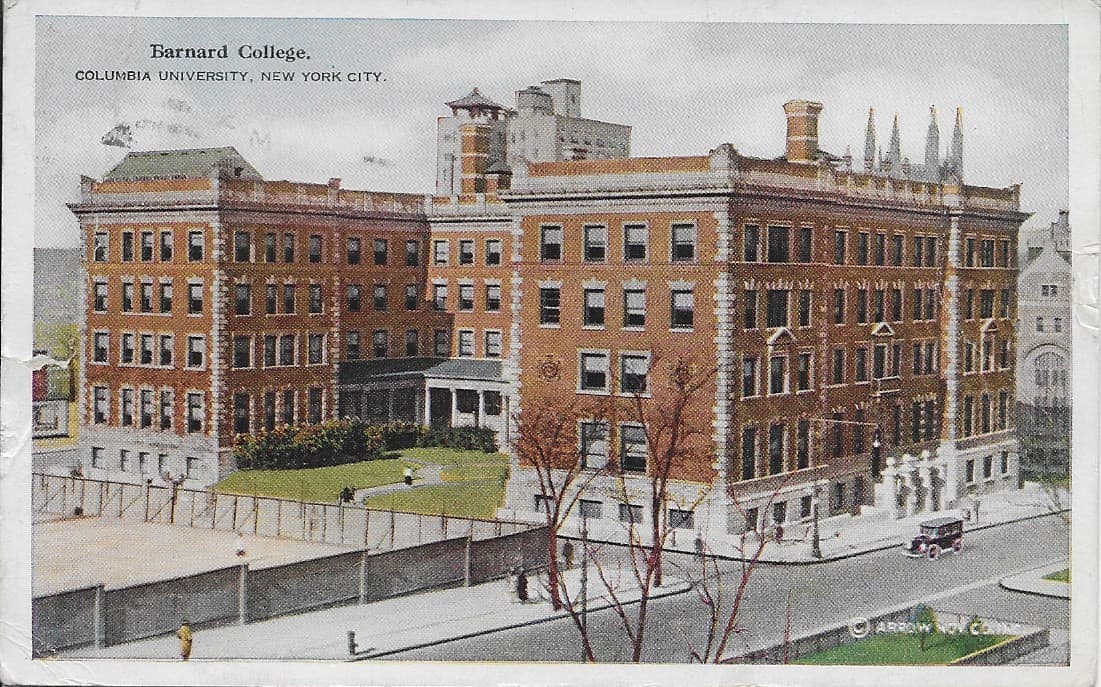
what is barnard college columbia university - Barnard is affiliated with Columbia University

While we each have our own curriculum requirements, admissions and financial aid processes, and unique student experiences, Barnard and Columbia share a lot. Students can attend classes at both campuses and participate in each other's clubs and events. We're two distinct communities, across-the-street partners that create a larger whole. Barnard College aims to provide the highest-quality liberal arts education to promising and high-achieving young women, offering the unparalleled advantages of an outstanding residential college in partnership with a major research university.

what is barnard college columbia university - Its the best of both worlds Barnard students experience the advantages of attending a small college

With a dedicated faculty of scholars distinguished in their respective fields, Barnard is a community of accessible teachers and engaged students who participate together in intellectual risk-taking and discovery. Barnard students develop the intellectual resources to take advantage of opportunities as new fields, new ideas, and new technologies emerge. They graduate prepared to lead lives that are professionally satisfying and successful, personally fulfilling, and enriched by a love of learning. Barnard is located just across Broadway from Columbia University's main campus and is one of four undergraduate schools of the University .

what is barnard college columbia university - Founded in 1889

At the same time, as an independent college, Barnard maintains its own campus, faculty, administration, trustees, operating budget and endowment, while Barnard students earn the degree of the University. Look for opportunities that complement one another between the two campuses. Barnard College considers the residential experience to be an integral part of a student's total education. Students who live on campus have a more productive and more satisfying college experience than those who live off campus. Students who live in campus housing are close to academic buildings, libraries, and dining facilities.

what is barnard college columbia university - Our unique and longstanding partnership with Columbia University provides students with a vast selection of additional course offerings

Trained, professional Residential Life & Housing staff members are present to provide social & academic programs and help in emergency situations. Additionally, living on campus provides access to amenities like internet access, laundry rooms, computer labs, music practice rooms, and study lounges. Students are not required to live on campus; however, students are encouraged to live on campus for at least their first year in order to acclimate to the campus and to New York City.

what is barnard college columbia university - A Barnard education is structured around The Nine Ways of Knowing

98% of Barnard First-Year students live on campus and over 90% of students overall. Students are encouraged to take advantage of interdisciplinary learning through exploring more than 50 fields of study in the social sciences, humanities, natural sciences, and arts. Barnard is a community of accessible teachers and dedicated students who embark collaboratively on a journey of intellectual risk-taking and discovery. The small, personal, and close-knit character of Barnard is augmented by Columbia's resources, allowing students to benefit from both an all-women and a coeducational experience. Barnard and Columbia students cross-register for courses and share a multitude of extra-curricular activities.
what is barnard college columbia university - Our faculty is comprised of leading scholars who serve as dedicated

Located just across the street from Columbia University, Barnard College shares its resources with Columbia. It is also part of the Seven Sisters, which are made up of historically women's colleges. These seven schools, which are highly selective liberal arts colleges in the Northeastern United States, are created to provide women with the same academic rigor as the Ivy League.

what is barnard college columbia university - The Colleges metropolitan location grants students access to thousands of internships in addition to excellent cultural

It is a liberal arts college but because of Columbia across the street Barnard students get both a small community and a larger university. And in all honesty, Barnard truly does feel like a little more independent undergraduate college of Columbia University, it's a pretty close relationships. It's rare to find a Barnard student who doesn't express what she feels articulately in a class.

what is barnard college columbia university - Barnard students graduate from the University

It's a great liberal arts college focused on goal oriented women's success. All of the administration wants to help and be accessible to the students. Barnard students, for the most part, while having a competitive edge, want to help each other. People think it's great when you tell them you go to Barnard, although initially between Columbia College Students and Engineering students, there may be a little tension. I don't spend all of my time on campus, there's lots to do in the city, and I view seeing the city as part of my education.

what is barnard college columbia university - Enjoying the Barnard experience

The administration tries to be open, transparent, and available to the student body. Right now we are transitioning to welcome our new president, which may change how the administration operates. Some people recognize that it is affiliated with Columbia University, but many of those who do don't know that it's right across the street. I definitely feel like Barnard has a campus, and you are either on or off it.
what is barnard college columbia university - I liked the balance between having an entire city at my doorstep and having the quiet

The Barnard campus feeling for me is so strong that being on Columbia's campus warrants a distinction despite the close proximity; I am at Columbia, not on campus. Just as the admissions office will tell you over and over - Barnard is the best of both worlds, a small college in a big city. Some people spend most of their time in the Barnard/Columbia/Morningside Heights area while others prefer to spend more time adventuring into the New York. The community can be what you make of it, if you want to find a large, close-knit, group of friends you will be able to. If you prefer to have one or two close girl friends, you can do that to.

what is barnard college columbia university - The campus is physically very small

The community is a good size, Barnard is small but if you ever feel claustrophobic, Columbia is a much larger community right across the street. Most people hangout on campus in the dorms, or in the Diana Center . A lot of people also choose to hangout at Columbia, in the libraries or the student center over there. Barnard has a lot of "Barnard Women" pride, but not a lot of pride in the traditional sense. If you really want a rah-rah campus with tons of pride for athletic events and school-sponsored functions, Barnard/Columbia is not the place for you.

what is barnard college columbia university - One potentially uncomfortable aspect of going to Barnard is the ambiguous relationship between Barnard and Columbia

I love pretty much everything about Barnard, I think its great that you can get the benefits of a women's college without having to sacrifice men. Barnard is only the second woman's college that I have visited. If I were to compare the two, I would say that both schools take very similar approaches to developing women not only for careers and further education, but also for leadership.

what is barnard college columbia university - When I tell people I went to Barnard

Both communities have the right examples of women as leaders within their administrations, their faculty and their student bodies. They also do an excellent job at preparing women for careers in the sciences. Both practice need-blind admissions and will attempt to meet a student's full financial need. Barnard's location offers its students a variety of work experiences on and off campus. 75% of Barnard students are estimated to complete an internship during their four years at the College. Barnard is amazing because it is a small liberal arts college with an abundant of resources, services, and support.

what is barnard college columbia university - But

It gives students the best of both worlds- a huge research university experience and a small student-centered liberal arts college experience. The community on campus is warm and welcoming, and the intellectual debate and dialogue is rigorous and stimulating. There is a ton of school pride, and most students are thrilled to be here and love it. The big picture is that Barnard is an all women's college in the middle of New York City. It's small, but you still get the big city atmosphere by just stepping out of the gates.

what is barnard college columbia university - The way I see it

You get the comfort of a school really dedicated to helping women be successful and you get to use all the resources of Columbia University. There is a lot of pride at Barnard and I don't see why there shouldn't be. It is discouraging sometimes when people ask me where I go to College and when I tell them they don't even know or they reply by saying, "You go to an all women's college?!?!" But I just set them straight. There is a nice prof to student ratio making the lecture and learning experience highly gratifying. The barnard setup is traditional with a campus, midterms and finals , hardly any papers, major general education requirements and little room for flexibility in terms of academic planning.

what is barnard college columbia university - Though Barnard partners with its across-the-street neighbour Columbia

The lectures are typical lectures but the profs try to be as engaging as possible. Obviously being in nyc is wonderful and makes the entire experience a hundred times better. It is a good feeling to go to a great school made for women that gives every student what they need for their future careers and lives in general.

what is barnard college columbia university - Students at Barnard may take courses and participate in athletics and organizations at Columbia

Barnard College Columbia University Acceptance Rate Barnard College is a private women's college with an acceptance rate of 11.8%. Founded in 1889, and located on a four-acre urban campus in Manhattan, New York, Barnard College is one of the originalSeven Sisterscolleges. Barnard is affiliated with the adjacentColumbia University, but maintains its own faculty, endowment, governance, and curriculum. However, Barnard and Columbia students can easily take classes at either school. School Information Founded in 1889, Barnard was the only college in New York City, and one of the few in the nation, where women could receive the same rigorous and challenging education available to men.

Barnard College Columbia University Acceptance Rate

The College was named after educator, mathematician, and 10th president of Columbia College Frederick A.P. Barnard, who argued unsuccessfully for the admission of women to Columbia University. The school's founding, however, was largely due to the rallying efforts of Annie Nathan Meyer, a student and writer who was equally dissatisfied with Columbia's stance and staunchly committed to the education of women. She joined forces with a small group of her peers to petition the University Trustees for an affiliated self-sustaining liberal arts women's college, and in two years accomplished what she had set out to do. Luckily, unlike some Seven Sisters schools and other all-women liberal arts colleges in the country, students at Barnard are not required to live on-campus. This means that they can deduct $15,691 from the sticker price if they wish to live elsewhere, bringing the total cost from $76,279 down to $60,588. Barnard College is a liberal arts college for women located at 117th Street and Broadway next to Columbia's Morningside Heights campus.

what is barnard college columbia university - Despite the affiliation Barnard is legally and financially separate from Columbia

Monday, January 3, 2022

Hours In A Work Week By Country

The more people work, the less time they have to spend on other activities, such as time with others, leisure activities, eating or sleeping. Furthermore, the more people work, the less time they have to spend on other activities, such as personal care or leisure. Fewer hours in paid work for women do not necessarily result in greater leisure time, astime devoted to leisure is roughly the same for men and women across the 20 OECD countries studied. The chapter also provides an update on working time trends across OECD countries. It shows that usual weekly hours, and the incidence of paid overtime have remained relatively stable over recent decades. Taken together , parallel trends in average annual hours worked, average time spent on leisure, and hourly productivity suggest that productivity increases have not led to extra leisure time.

hours in a work week by country - The more people work

One possible explanation for this is that workers faced with a decreasing labour share have opted for increases in hourly wages rather than reduction in hours worked. The more people work, the less time they have to spend on other activities, such as personal care or leisure. In Germany, the April 2020 Working Hours Ordinance authorised an extension of daily working time up to 12 hours, while the weekly working time could be extended beyond 60 hours in exceptional cases. In Greece, between March and August 2020, employers who had exhausted the legally prescribed overtime ceilings of their workers, could use overtime without approval from the Ministry of Labour and Social Affairs in the respect of maximum daily limits.

hours in a work week by country - Furthermore

In Israel, the Ministry of Labour introduced in March 2020 a temporary permission to work additional hours up to 67 hours a week but no longer than 90 extra hours a month. The permission also included the possibility to work up to 14 hours a day including overtime, up to 8 times a month. In Norway and Sweden,75 national-level collective agreements gave room for more flexibility to actors at the local level regarding the extended use of overtime. As for normal hours, procedural requirements and modalities vary across OECD countries. In Austria and Denmark, averaging of maximum weekly hours requires a collective agreement. In Estonia, Germany, Latvia, Norway and Portugal, the averaging of maximum weekly hours can be introduced pending employees' consent.

hours in a work week by country - Fewer hours in paid work for women do not necessarily result in greater leisure time

In Hungary,25 the Netherlands, Slovenia or Sweden, maximum weekly hours can be averaged unilaterally by employers. The Netherlands' average workweek for full-time employees is 37.3 hours, the second-lowest among the most affluent OECD countries. With only 0.4% of employees working over 50 hours per week, the Dutch have some of the world's best work-life balance. Residents reported that they spend about 15.9 hours per day eating, sleeping, and leisure.

hours in a work week by country - The chapter also provides an update on working time trends across OECD countries

Looking at trends in usual weekly hours and weekly overtime illustrates how the usual week of the average full-time employee in the OECD has evolved in the last decades. However, it cannot be used to assess how the overall quantity of work per full-time employee changed over time, since the latter is also a function of the number of weeks worked , in addition to the usual amount of work per week. However, there are no sources allowing for a reliable comparison of days off taken across countries.

hours in a work week by country - It shows that usual weekly hours

Whaples finds that among the most important city-level determinants of the workweek during this period were the availability of a pool of agricultural workers, the capital-labor ratio, horsepower per worker, and the amount of employment in large establishments. Eastern European immigrants worked significantly longer than others, as did people in industries whose output varied considerably from season to season. High unionization and strike levels reduced hours to a small degree. The average female employee worked about six and a half fewer hours per week in 1919 than did the average male employee. In city-level comparisons, state maximum hours laws appear to have had little affect on average work hours, once the influences of other factors have been taken into account. One possibility is that these laws were passed only after economic forces lowered the length of the workweek.

hours in a work week by country - Taken together

Overall, in cities where wages were one percent higher, hours were about -0.13 to -0.05 percent lower. Again, this suggests that during the era of declining hours, workers were willing to use higher wages to "buy" shorter hours. As the length of the workweek gradually declined, political agitation for shorter hours seems to have waned for the next two decades.

hours in a work week by country - One possible explanation for this is that workers faced with a decreasing labour share have opted for increases in hourly wages rather than reduction in hours worked

However, immediately after the Civil War reductions in the length of the workweek reemerged as an important issue for organized labor. Roediger argues that many of the new ideas about shorter hours grew out of the abolitionists' critique of slavery — that long hours, like slavery, stunted aggregate demand in the economy. The leading proponent of this idea, Ira Steward, argued that decreasing the length of the workweek would raise the standard of living of workers by raising their desired consumption levels as their leisure expanded, and by ending unemployment. The hub of the newly launched movement was Boston and Grand Eight Hours Leagues sprang up around the country in 1865 and 1866.

hours in a work week by country - The more people work

The leaders of the movement called the meeting of the first national organization to unite workers of different trades, the National Labor Union, which met in Baltimore in 1867. The passage of the state laws did foment action by workers — especially in Chicago where parades, a general strike, rioting and martial law ensued. In only a few places did work hours fall after the passage of these laws. Many become disillusioned with the idea of using the government to promote shorter hours and by the late 1860s, efforts to push for a universal eight-hour day had been put on the back burner. Here again, Figure 5.3 does not display a clear-cut relationship between the degree of variation allowed in the rules and the actual degree of variation in outcomes observed. The median amount of paid overtime for full-time employees tend to stay within the limits fixed in the law or in higher level collective agreements in most countries47 that give extensive possibility for the upper limit on overtime to vary.

hours in a work week by country - In Germany

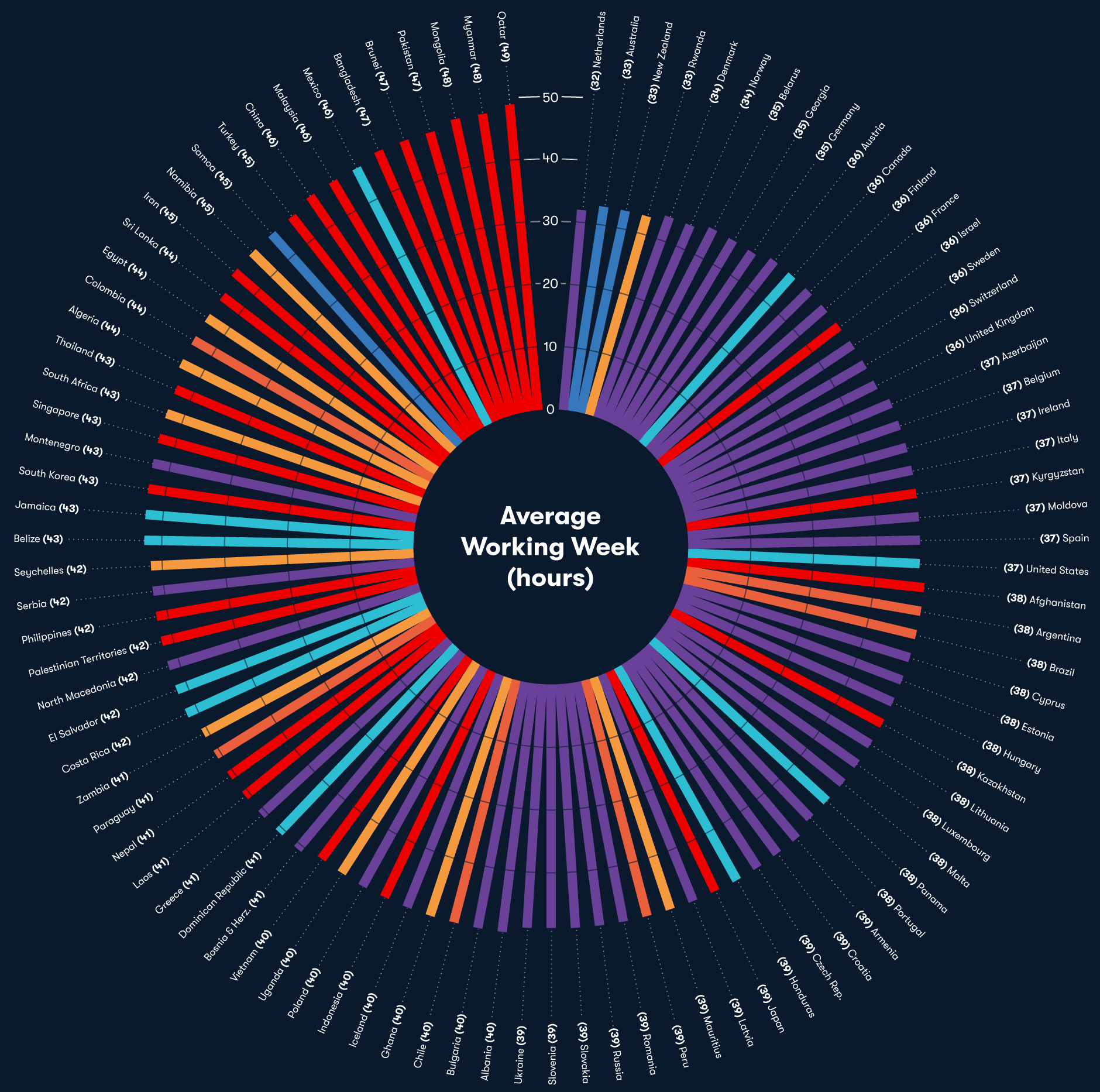
In Belgium, the Czech Republic, Denmark, Latvia, and the Slovak Republic, rules governing maximum weekly hours/overtime are likely to be mostly uniform. The upper limit is binding, but there is a limited possibility to use averaging mechanisms, only with the employee's consent or through a collective agreement. In all these countries but Latvia and Denmark, there is a binding minimum compensation for overtime hours . On average in OECD countries, usual weekly hours for full-time employees remained fairly constant between 1995 and 2019, despite small cross-country variations. The median full-time employee usually worked 40.5 hours per week in 2019, ranging from 37 hours in Denmark to 48 hours in Mexico and Colombia. Since the mid-2000s, the incidence of paid overtime has remained stable at just over 7.5% of full-time employees, while that of unpaid overtime decreased slightly, from 6.2% to 5.1%.

hours in a work week by country - In Greece

For those working overtime, the average number of additional hours is considerable, amounting to 8.3 for paid overtime (7.7 for unpaid overtime), or one additional day per week in 2019. Working time is a crucial variable shaping the labour market and its adaptability to shocks. It can affect key labour market outcomes, such as workers' well-being, productivity, wages and employment. Documenting how OECD countries regulate working time, and understanding how different regulatory settings shape working time outcomes is crucial for policy makers seeking to balance equity, efficiency and welfare considerations. This chapter offers a detailed review of regulations governing working hours, paid leave, and teleworking in OECD countries.

hours in a work week by country - In Israel

It discusses the role of collective bargaining in negotiating working hours or working time arrangements, and how OECD countries have adapted their working time regulation during the COVID-19 crisis. The chapter also provides an update on working time patterns and trends in time use across OECD countries and socio-demographic groups. It measures how differences across workers in working time outcomes have changed over time and driven inequalities in work-life balance. Actual hours worked include regular work hours of full-time part-time and part-year workers paid and unpaid overtime hours worked in additional jobs and exclude time not worked because of public holidays annual paid leave own. Pilot programs run by governments and businesses in countries such as Iceland, New Zealand, Spain and Japan have experimented with a four-day workweek and reported very promising results.

hours in a work week by country - The permission also included the possibility to work up to 14 hours a day including overtime

This is a global paradigm shift that will bring into question everything we thought we knew about the workplace. Historically employers and employees often agreed on very long workweeks because the economy was not very productive (by today's standards) and people had to work long hours to earn enough money to feed, clothe and house their families. The long-term decline in the length of the workweek, in this view, has primarily been due to increased economic productivity, which has yielded higher wages for workers. Workers responded to this rise in potential income by "buying" more leisure time, as well as by buying more goods and services. In a recent survey, a sizeable majority of economic historians agreed with this view. Over eighty percent accepted the proposition that "the reduction in the length of the workweek in American manufacturing before the Great Depression was primarily due to economic growth and the increased wages it brought" .

hours in a work week by country - In Norway and Sweden

For example, roughly two-thirds of economic historians surveyed rejected the proposition that the efforts of labor unions were the primary cause of the drop in work hours before the Great Depression. The number of RTT days varies every year but is around 10 days annually. Second, LFS data depend on respondent recall and proxy responses, so hours worked and not worked may not be correctly reported due to faulty memory or lack of information.1 Finally, LFS data only cover resident employees.

hours in a work week by country - As for normal hours

In countries, such as Belgium, Luxembourg or Switzerland, with many cross-border workers, employment data from this source may not correspond to those employed in the country's production of output, thus affecting working hours measures. An important aspect of work-life balance is the amount of time a person spends at work. Evidence suggests that long work hours may impair personal health, jeopardise safety and increase stress.11% of employees in the OECD work 50 hours or more per week.

hours in a work week by country - In Austria and Denmark

Turkey is by far the country with the highest proportion of people working very long hours, with 33%, followed by Mexico with nearly 29% and Colombia with almost 27% of employees. Overall, more men work very long hours; the percentage ofmale employees working very long hours across OECD countries is over 15%, compared with about 6% for women. Our economy is composed not only of white-collar workers, and people from all backgrounds should benefit from the changing status quo.

hours in a work week by country - In Estonia

The pandemic left millions of hourly workers unemployed or underemployed. The labor market is becoming more competitive, and workers must feel enabled to demand better working conditions at higher wages, which is why I've introduced federal legislation to lower the overtime threshold from 40 hours to 32 hours per week for non-exempt employees. This legislation does not limit the number of hours a person can work; it entitles employees to begin earning time-and-a-half after 32 hours of work, resulting in a 10% pay increase. Employers would either pay their employees additional overtime or find other workers to fill in the gaps. Because of changing definitions and data sources there does not exist a consistent series of workweek estimates covering the entire twentieth century.

hours in a work week by country - In Hungary

Hours In A Week Work Despite differences among the series, there is a fairly consistent pattern, with weekly hours falling considerably during the first third of the century and much more slowly thereafter. In particular, hours fell strongly during the years surrounding World War I, so that by 1919 the eight-hour day had been won. Hours fell sharply at the beginning of the Great Depression, especially in manufacturing, then rebounded somewhat and peaked during World War II. After World War II, the length of the workweek stabilized around forty hours. Owen's nonstudent-male series shows little trend after World War II, but the other series show a slow, but steady, decline in the length of the average workweek. Greis's two series are based on the average length of the workyear and adjust for paid vacations, holidays and other time-off.

Hours In A Week Work

The last column is based on information reported by individuals in the decennial censuses and in the Current Population Survey of 1988. It may be the most accurate and representative series, as it is based entirely on the responses of individuals rather than employers. Since data on usual hours do not include overtime,85 Figure 5.9 displays trends in paid and unpaid overtime for full-time employees in OECD countries for which data are available over the last decade. The average incidence of paid overtime per employee remained relatively stable between 2006 and 2019. By contrast, weekly hours of paid overtime per worker reporting it fell by about one hour between 2006 and 2019. As for the incidence of unpaid overtime, it slightly decreased on average, from 6.2% in 2006 to 5.1% of employees in 2019.

hours in a work week by country - With only 0

Those working unpaid overtime in 2019 also worked on average close to one hour less each week than in 2006. To determine how long the average workweek is around the world, 24/7 Wall St. analyzed data on the average hours usually worked among dependent employees in 2018 from the Organisation for Economic Co-operation and Development. Data on the percentage of dependent employees who work part-time -- less than 30 hours a week -- also came from the OECD and is for 2018. Additional data listed is all from the OECD and is for the most recent period available.

hours in a work week by country - Residents reported that they spend about 15

All figures are annual except for unemployment figures, which are quarterly. All data on employee hours and part-time work are for dependent employees, meaning it does not include self-employed workers. The swift reduction of the workweek in the period around World War I has been extensively analyzed by Whaples . His findings support the consensus that economic growth was the key to reduced work hours. He finds that the rapid economic expansion of the World War I period, which pushed up real wages by more than 18 percent between 1914 and 1919, explains about half of the drop in the length of the workweek.

hours in a work week by country - Looking at trends in usual weekly hours and weekly overtime illustrates how the usual week of the average full-time employee in the OECD has evolved in the last decades

The reduction of immigration during the war was important, as it deprived employers of a group of workers who were willing to put in long hours, explaining about one-fifth of the hours decline. The rapid electrification of manufacturing seems also to have played an important role in reducing the workweek. Increased unionization explains about one-seventh of the reduction, and federal and state legislation and policies that mandated reduced workweeks also had a noticeable role. During the 1920s agitation for shorter workdays largely disappeared, now that the workweek had fallen to about 50 hours. However, pressure arose to grant half-holidays on Saturday or Saturday off — especially in industries whose workers were predominantly Jewish. By 1927 at least 262 large establishments had adopted the five-day week, while only 32 had it by 1920.

hours in a work week by country - However

The most notable action was Henry Ford's decision to adopt the five-day week in 1926. Ford employed more than half of the nation's approximately 400,000 workers with five-day weeks. However, Ford's motives were questioned by many employers who argued that productivity gains from reducing hours ceased beyond about forty-eight hours per week. Even the reformist American Labor Legislation Review greeted the call for a five-day workweek with lukewarm interest. During the first decades of the twentieth century, arguments favoring shorter hours moved away from Steward's line that shorter hours increased pay and reduced unemployment to arguments that shorter hours were good for employers because they made workers more productive. A new cadre of social scientists began to offer evidence that long hours produced health-threatening, productivity-reducing fatigue.

hours in a work week by country - However

This line of reasoning, advanced in the court brief of Louis Brandeis and Josephine Goldmark, was crucial in the Supreme Court's decision to support state regulation of women's hours in Muller vs. Oregon. In addition, data relating to hours and output among British and American war workers during World War I helped convince some that long hours could be counterproductive. Businessmen, however, frequently attacked the shorter hours movement as merely a ploy to raise wages, since workers were generally willing to work overtime at higher wage rates. These legal frameworks are sometimes set up in dedicated laws, or included in general labour laws or in national or sectoral collective agreements .

hours in a work week by country - Whaples finds that among the most important city-level determinants of the workweek during this period were the availability of a pool of agricultural workers

Outcomes observed reflect, at least to some extent, the content of rules on weekly working hours. The very high statutory limits on normal weekly hours in Chile, Colombia, Israel, Mexico and Turkey go hand in hand with a high median in usual weekly hours. The first block introduced the general organisation and governance of working time regulation (e.g. the hierarchy between statutory and negotiated norms and the degree of flexibility in deviating from standards set in the law or in collective agreements at higher levels). The second block was dedicated to the regulation of the amount of hours worked . The third block examined the regulation of leave and public holidays. The fourth block looked at the regulation of the organisation of working time (e.g. unsocial hours and flexible working time arrangements).

hours in a work week by country - Eastern European immigrants worked significantly longer than others

The fifth block collected information related to the existence of short-time work and more generally job retention schemes and how they have been adjusted as a response to the COVID-19 crisis . Finally, the sixth block focused on recent reforms of working time regulation. Hours actually worked means hours spent directly on work and excludes things like annual leave, sick leave, public holidays, meal breaks, and commuting time. Unpaid family work in this case generally includes market-oriented work, such as for the family business, but not other unpaid work at home such as childcare, cooking, and cleaning. Since the latter type of unpaid work is typically performed by women, this has large implications for understanding gender differences in labor. We discuss these issues as part of our entry on Women's Employment.

hours in a work week by country - High unionization and strike levels reduced hours to a small degree

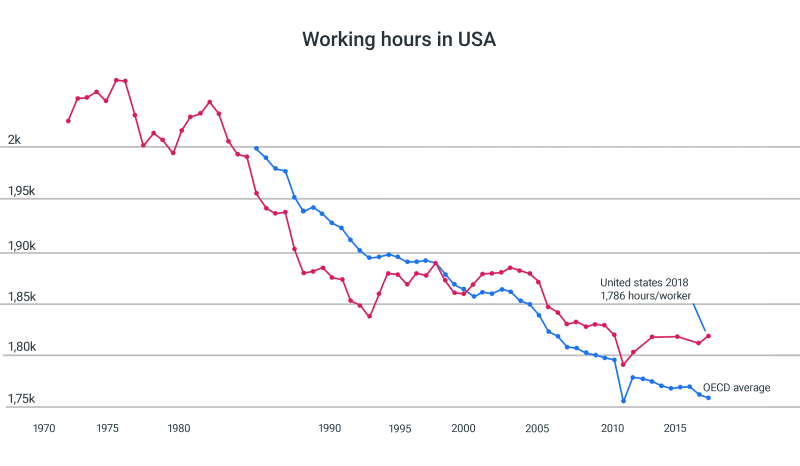
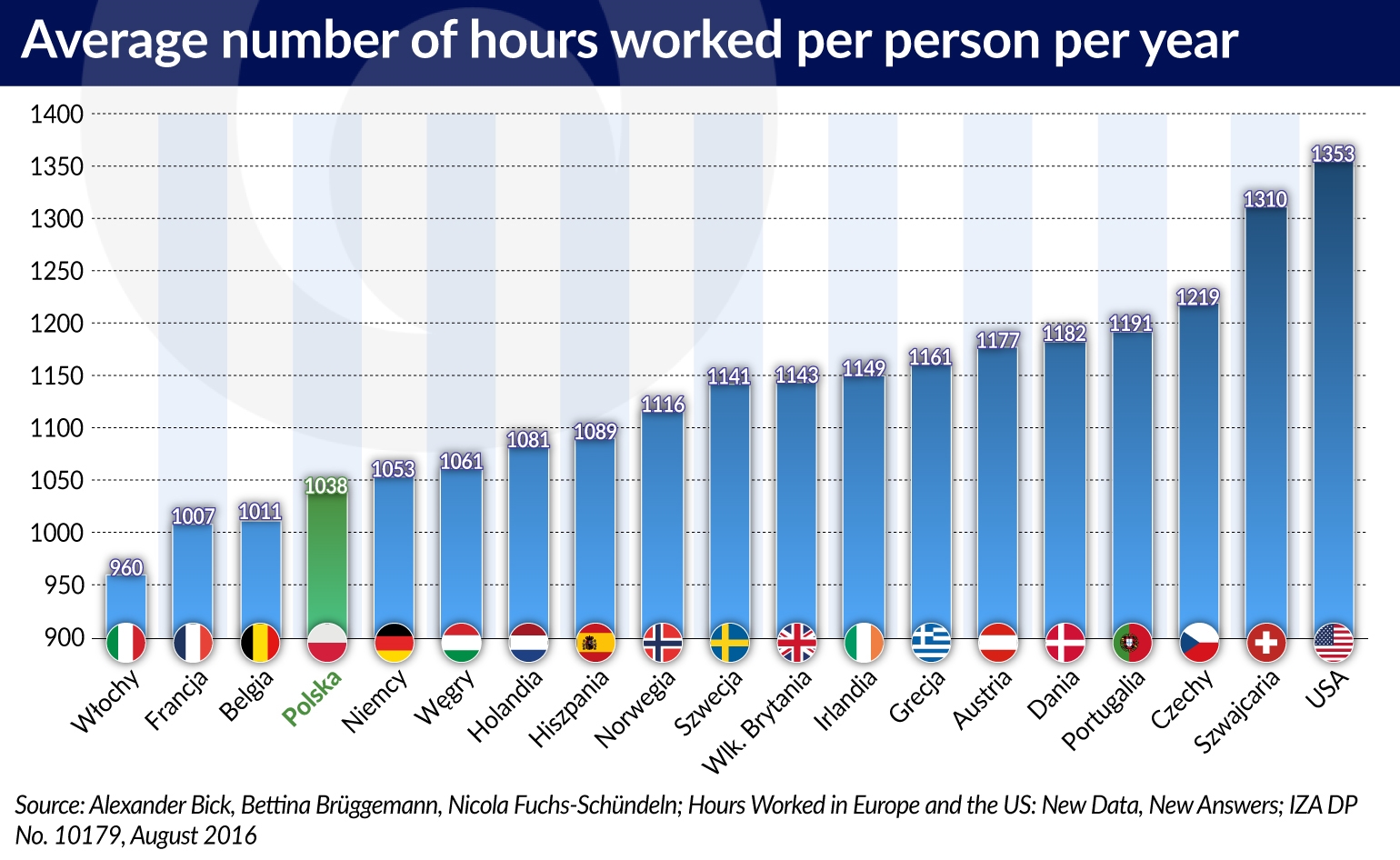
Data from the Organisation for Economic Co-operation and Development show that the average annual hours worked by employed people in 2020 were lowest in Germany at 1,332 (25.6 per week). Americans work an average of 1,767 hours , while Canadians work 1,664 hours . Among other places experimenting with four-day workweeks, those in the United Kingdom work 26 hours per week, Spaniards work 30 hours per week, and the Japanese work 31 hours per week. Time poverty and gender roles present significant barriers to women's participation in the labour market. At home, Mexican women spend 4 hours more per day on unpaid care and housework than men. Mexicans also work longer annual hours than workers in all other OECD countries, and have one of the longest average daily commute times in the OECD, after Japan and Korea.

hours in a work week by country - The average female employee worked about six and a half fewer hours per week in 1919 than did the average male employee

These time constraints complicate work-life balance and present significant challenges for mothers, especially as an increasing share of them are sole parents. The movement for shorter hours as a depression-fighting work-sharing measure built such a seemingly irresistible momentum that by 1933 observers predicting that the "30-hour week was within a month of becoming federal law" . During the period after the 1932 election but before Franklin Roosevelt's inauguration, Congressional hearings on thirty hours began, and less than one month into FDR's first term, the Senate passed, 53 to 30, a thirty-hour bill authored by Hugo Black. Labor leaders were persuaded by NIRA Section 7a's provisions — which guaranteed union organization and collective bargaining — to support the NIRA rather than the Black-Connery Thirty-Hour Bill. Business, with the threat of thirty hours hanging over its head, fell raggedly into line. (Most historians cite other factors as the key to the NIRA's passage. See Barbara Alexander's article on the NIRA in this encyclopedia.) When specific industry codes were drawn up by the NIRA-created National Recovery Administration , shorter hours were deemphasized.

hours in a work week by country - In city-level comparisons

Despite a plan by NRA Administrator Hugh Johnson to make blanket provisions for a thirty-five hour workweek in all industry codes, by late August 1933, the momentum toward the thirty-hour week had dissipated. About half of employees covered by NRA codes had their hours set at forty per week and nearly 40 percent had workweeks longer than forty hours. When Samuel Slater built the first textile mills in the U.S., "workers labored from sun up to sun down in summer and during the darkness of both morning and evening in the winter. Only attracted attention when they exceeded the common working day of twelve hours," according to Ware . This agitation was led by Sarah Bagley and the New England Female Labor Reform Association, which, beginning in 1845, petitioned the state legislature to intervene in the determination of hours.

hours in a work week by country - One possibility is that these laws were passed only after economic forces lowered the length of the workweek

The petitions were followed by America's first-ever examination of labor conditions by a governmental investigating committee. The Massachusetts legislature proved to be very unsympathetic to the workers' demands, but similar complaints led to the passage of laws in New Hampshire and Pennsylvania , declaring ten hours to be the legal length of the working day. However, these laws also specified that a contract freely entered into by employee and employer could set any length for the workweek. Legislation passed by the federal government had a more direct, though limited effect. On March 31, 1840, President Martin Van Buren issued an executive order mandating a ten-hour day for all federal employees engaged in manual work. Throughout the last 20 years, in the ten OECD countries for which data are available, men consistently spent a larger portion of their day on work-related activities (e.g. paid work, studying, looking for a job) than women.

hours in a work week by country - Overall

How Much To Rent A Party Hall

On the most important day of your life, it is important to choose the right setting for your special occasion. Wedding receptions will be re...